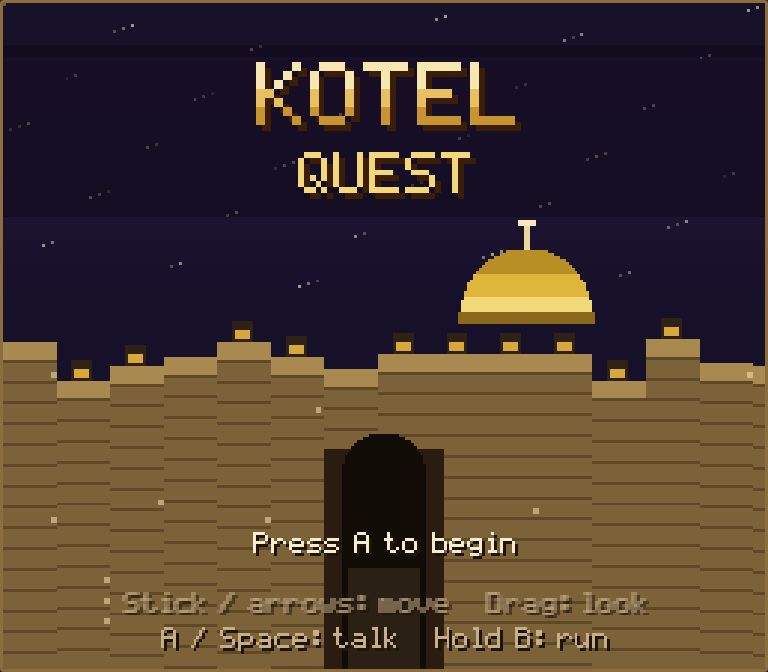
A free browser game about getting lost in the Old City of Jerusalem.
You have a folded note in your pocket, no map, and no idea where you are. The Western Wall is a fifteen minute walk from here. You will not make it in fifteen minutes.
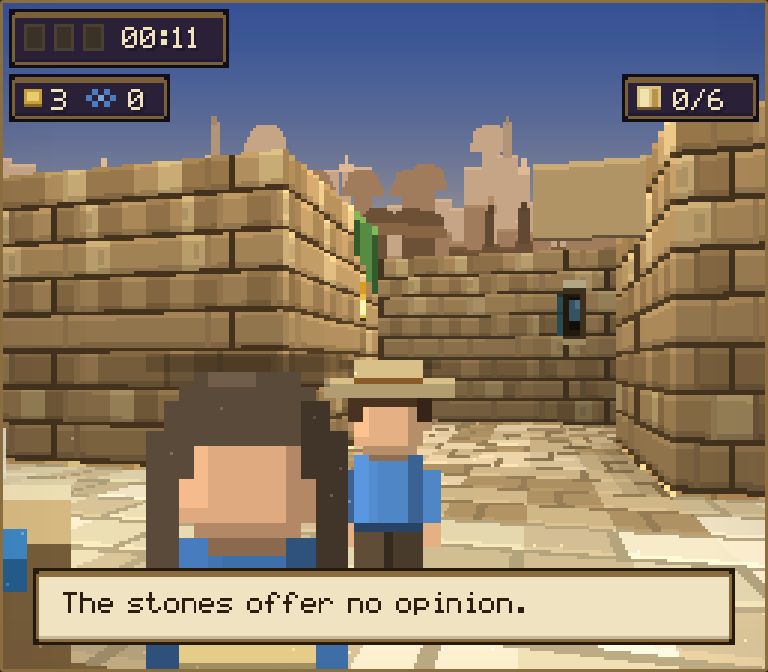
The camera rides behind you. Every wall, awning and paving stone is drawn by hand, one pixel at a time.
What it is
Kotel Quest is a short adventure game set in the Old City of Jerusalem, built to look like a console from 1993 and to feel like a Tuesday afternoon in the shuk.
You wrote something on a scrap of paper this morning and folded it down to the size of a stamp. The plan is simple: walk to the Kotel, put it in the wall, walk back. You come through Jaffa Gate, take one turn into the alleys, and lose all sense of direction inside a minute.
The Old City is about a square kilometre. It is also a knot of covered markets, blind corners, staircases that double back, and four quarters that all look like each other until you have been there a while. The game gives you no map and no waypoint. It gives you people to ask.
How you find the way
Every person you stop will help you. They will also tell you about their cousin, sell you something, or take a long moment to explain how it was in 1967.
Thirty-one of them, each with something specific to say. Directions come mixed with opinions, and the opinions are usually the good part.
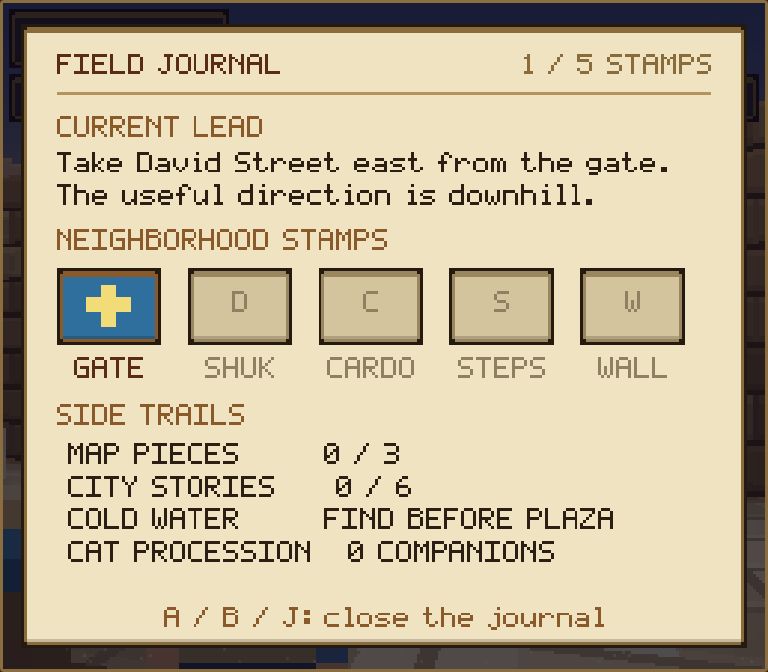
Three pieces of an old pilgrim map are scattered across the quarters. One gives you a compass. All three lay the city out flat.
The oldest advice in the city, and the only advice that always works. The Kotel sits low in the southeast corner, beneath everything.
Who is in there
The cast is the reason to walk slowly. Everyone is drawn from the actual population of that square kilometre on an ordinary day.
A man selling bootleg t-shirts who will go to eighty for three. Samir with the knafeh from Nablus. A juice vendor who will tell you a pomegranate holds six hundred and thirteen seeds. A procession carrying a cross along the Via Dolorosa. A tour guide counting twenty-nine red hats from Seoul. Birthright kids on day six, running on nine hours of sleep. Soldiers at the bag check. A Chabadnik with a folding table who would like ninety seconds of your arm.
And four people asking for tzedaka, of whom two actually need it. Working out which two is the closest thing the game has to a puzzle. The man raising money for a yeshiva building fund has remarkably new sneakers, and the cat on that corner does not care for him.
Two questions before you start
The game asks you two things at the beginning. One of them matters at the very end. The other is a joke that turns out to matter quite a lot too.
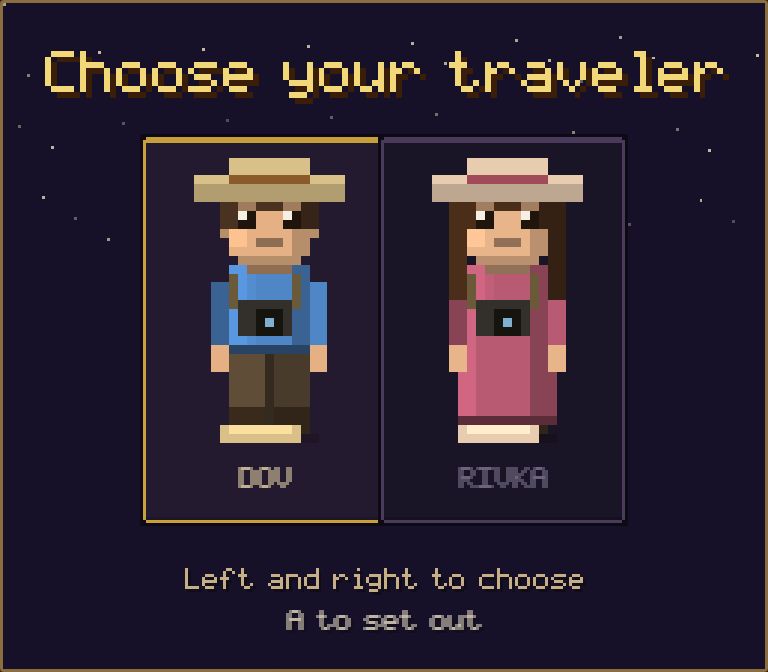
Your choice decides which side of the divider you pray on when you arrive, so the ending is a different scene depending on who you picked. Choose the one you would actually be.
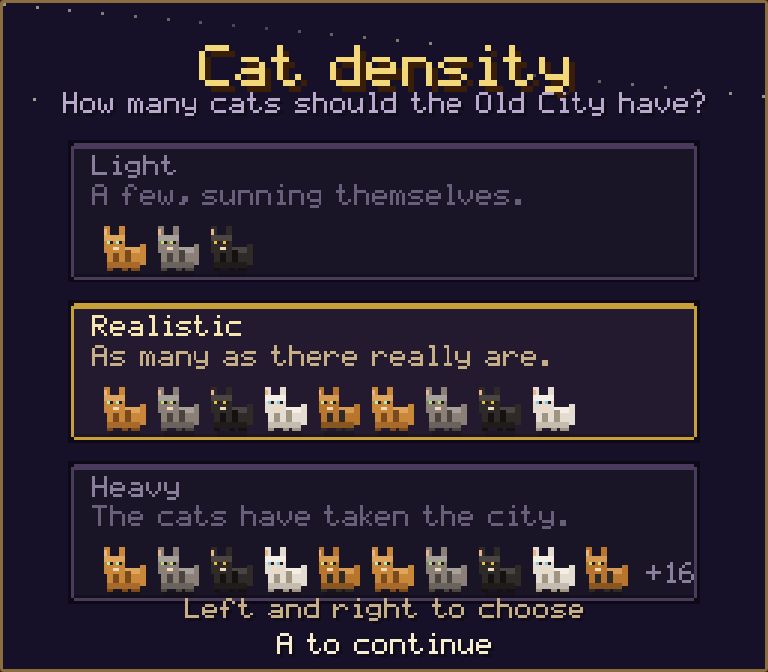
Jerusalem has a great many street cats. Set how many you want. Pet the same one three times and it joins you permanently — and on heavy, so will the next one, and the one after that.
How it ends
Reach your section of the plaza and the game quietly takes the controls away from you.
The camera swings around and settles behind your shoulder. Nine people are davening at the wall beside you, swaying, and you are swaying with them. Your note goes into a crack, folded small, among a hundred thousand others that nobody will ever read. A summary of your afternoon slides up over the top of it — how long you took, who you greeted, where your money went, whether you got your tefillin on.
You can close that summary and just keep watching. It will run as long as you want it to.
Practical
The studio
We make small games with a strong sense of place. Kotel Quest is one of them. Come see what else is on the shelf.